
JUSTINSART.CO.UK · Theoretical Physics
Adaptive Field Canonical PhysicsAFCP
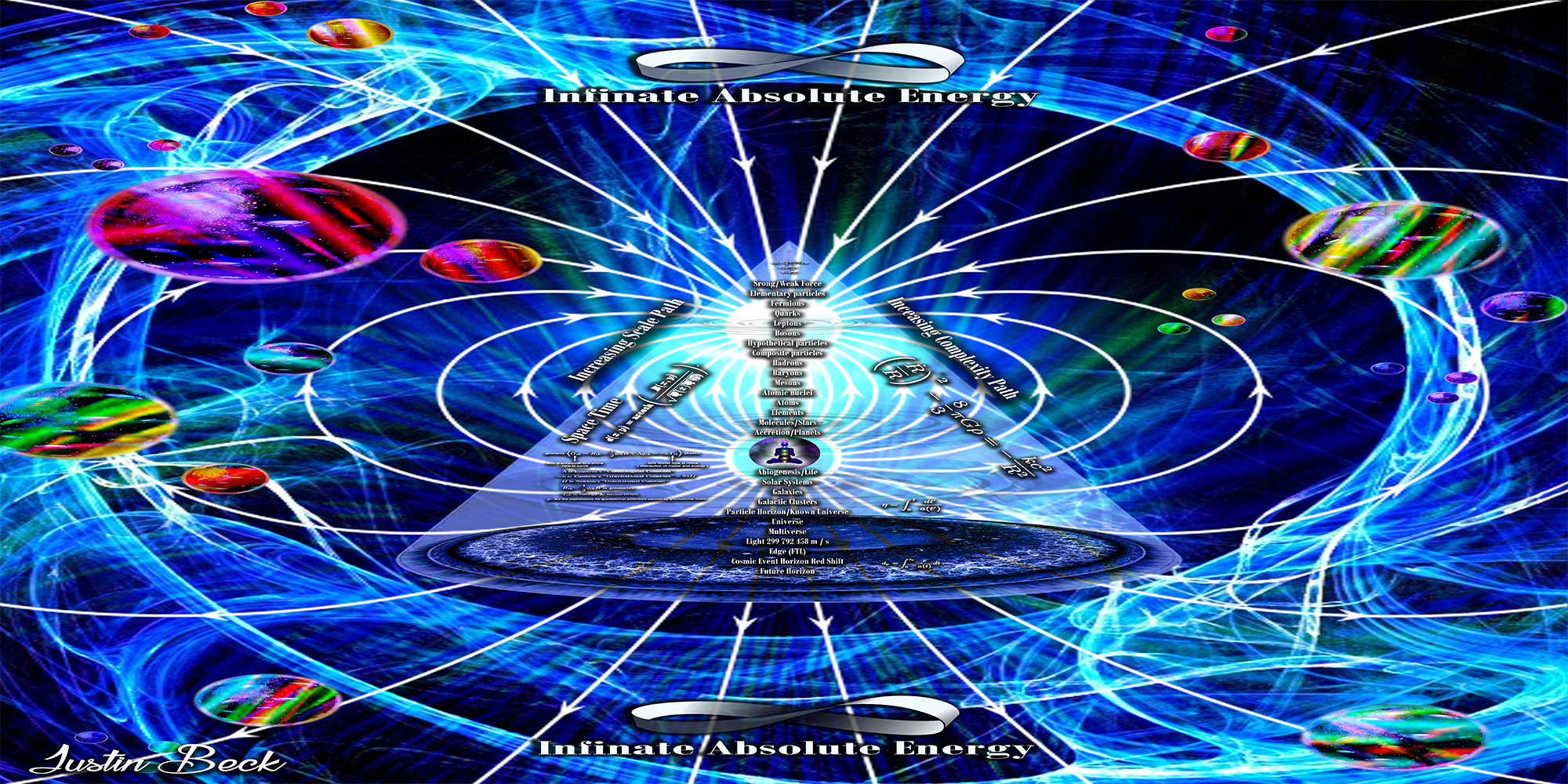
AFCP is a generative constraint grammar, not a descriptive theory. From a single irreducible axiom it builds a 34-layer lattice designed to interface below, within and above conventional physics. Sole author and architect: Justin Beck. In development since 1984.
What AFCP Is
The framework in four points.
One axiom
Everything starts from x = 1 + 1/x, whose solution is the golden ratio φ ≈ 1.618. No free parameters are added along the way.
34 layers
The lattice runs from L0 (φ-Genesis) to L33 (Möbius Return), which closes back onto L0. Structure is derived by elimination: what survives the constraints is what remains.
A living lattice
The lattice is never frozen. Closing a gap at one resolution reveals finer structure inside the same 34 layers, so the framework stays generative.
Meta-level, not a rival theory
AFCP specifies the syntax beneath existing theories rather than replacing them. It is a constraint grammar designed to interface below, within and above conventional physics.
Origins
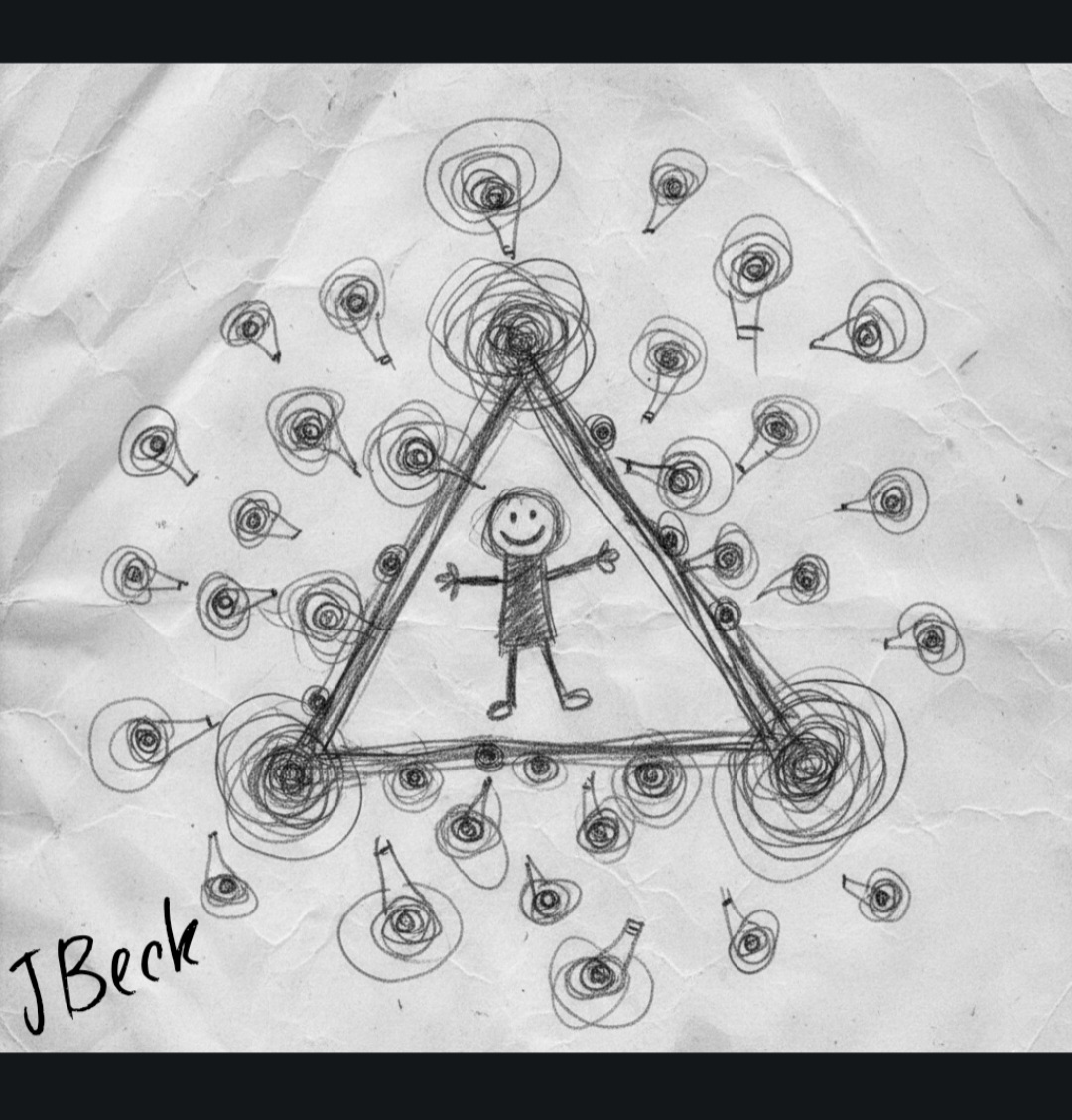
From a childhood drawing to a 34-layer lattice.

Across Domains
One grammar, applied wherever structure can be tested by elimination.
Physics & cosmology
Constraint checks against physical constants and cosmological observations, including an empirical test against 6,153 FRB and pulsar sources (CF-014.A).
Time
CF-013 treats time as an emergent binding constraint, and reframes proposals such as three-dimensional time as interference between the lattice's independent rhythms.
Economics & social science
The same elimination toolkit, applied by an AI to a contested macroeconomic claim, generalised from physical climate data to social science (RGS, 2026).
Computing architecture
The Digital Triune Brain maps AFCP onto computing: a deterministic core, a statistical model layer, and an AFCP meta-cortex wrapped around both.
AFCP and AI
Large language models are statistical mirrors of their training data. They can simulate criticism but cannot change their own epistemic operating principles. AFCP provides a formal method for an AI to reflect on its own assumptions, switch between epistemic modes and audit its own outputs.
Self-audit
A formal method for an AI to audit its own outputs through invariant cross-stratum elimination.
Mode switching
Moves an AI from consensus-protection to first-principles elimination, and lets it reflect on its own assumptions.
Numerology vs mechanism
Filter G separates a numerical match from a physical mechanism: the most common failure mode in theoretical physics claims.
Demonstrated live
In a 2026 live session, a patched LLM applied the AFCP toolkit, generalised it to a new domain, identified a missing filter and extended the tool itself.
Research Log
Dated entries with status exactly as issued.
The Clave Pattern (V38)
IDENTIFIED · INTEGRATEDThree-axis lattice encoding, a palindromic depth heartbeat (3,2,6,2,3) and time as an emergent binding constraint, now compared with three-dimensional time models.
Fractal Resolution Principle
IDENTIFIEDClosure at one resolution reveals a higher-resolution manifold inside the same 34 layers: the lattice grows in node density, not in layer count.
5D Möbius Terminus
CONFIRMED · empirical validation against 6,153 FRB/pulsar sourcesThe first operational realisation of the Fractal Resolution Principle, with a direct mapping from AFCP parameters to observable plasma quantities.
The Reflective Generative Substrate (V2.0)
Theoretical framework + empirical demonstrationOn the emergence of meta-cognitive intelligence from AFCP. Adds Filter G, the numerology–mechanism distinction, to the Moriarty Arbiter.
Developer Access
AFCP's operational tooling is proprietary and available by request only.
- Lattice navigation framework (V25)
- Moriarty Arbiter: seven filters
- Holmes Key and Kimi Method
- AI integration guidance
Access is granted at the author's discretion under written terms. Please include your name, organisation and intended use.
AFCP, its lattice, operators and associated methods are the proprietary work of Justin Beck. No reproduction, derivative works or use in AI model training without written permission.